Existing Patients
(908) 850-4200
New Patients
(908) 275-5307


At Paulussen Dental, we combine modern technology with thoughtful, patient-centered care to restore teeth that are damaged, weakened, or cosmetically compromised. Our goal is to provide solutions that blend function and natural-looking aesthetics so you can feel confident smiling, speaking, and eating without hesitation.
Tooth enamel is extraordinarily hard, but everyday wear, decay, injury, and habits such as clenching can leave a tooth unable to perform its job. In many cases, a conservative filling is enough to repair damage. When a tooth has lost a significant amount of structure, however, a full-coverage restoration—commonly called a crown—offers a more reliable long-term solution.
Advances in ceramic materials have allowed dentistry to move beyond metal-based crowns to durable, metal-free restorations that closely mimic the look and light behavior of natural teeth. Below you’ll find an in-depth look at when ceramic crowns are appropriate, what makes them different, how the treatment works, and how to care for them to maximize longevity.
A crown is a protective cover that restores a tooth’s shape, strength, and appearance. Dentists recommend crowns when a tooth is too compromised for a filling to hold or when preserving as much of the remaining structure as possible is a priority. The decision is based on function, appearance, and long-term prognosis rather than purely on immediate repair.
Common reasons a crown becomes the best option include extensive decay, fracture, root canal treatment, or when a tooth serves as an anchor for a bridge or implant. Crowns also help when significant portions of the biting surface are missing and a durable, contoured surface is required to restore proper chewing and bite alignment.
Because each mouth and tooth is unique, careful examination and planning are essential. Your dentist will assess the tooth’s condition, the bite relationship, and cosmetic goals before recommending a crown so the final restoration supports both function and appearance over time.
To protect and rebuild a tooth with extensive decay or structural damage
To replace a fractured or failing filling that can no longer reliably restore the tooth
To complete a dental implant restoration, providing a tooth-like crown on the implant post
To support the abutment teeth of a traditional dental bridge
To strengthen a tooth after root canal therapy and prevent reinjury
To correct the appearance of a discolored, misshapen, or undersized tooth

Ceramic crowns have evolved to offer a combination of strength and lifelike esthetics that wasn’t possible with older materials. Unlike crowns that hide metal beneath a porcelain veneer, contemporary all-ceramic options are metal-free, which eliminates visible dark margins at the gumline and provides superior translucency for a natural appearance.
Beyond looks, today’s dental ceramics are engineered for durability. Many ceramic systems are strong enough for use on back teeth, and materials like zirconia and lithium disilicate provide a favorable balance of fracture resistance and aesthetic qualities. Ceramics are also biocompatible and tend to be gentle on surrounding soft tissues.
For patients who value a natural look, reduced tooth reduction, and materials that interact with light similarly to enamel, all-ceramic crowns are often the preferred choice. They are also resistant to staining and do not introduce metal allergies or sensitivities into the mouth.
Metal-free construction that avoids visible dark margins and metal sensitivity concerns
Natural translucency and luster, producing an appearance close to real tooth structure
Minimal discoloration over time—ceramics are resistant to common staining agents
Potential for more conservative tooth preparation in many cases, preserving tooth structure
Strong, durable options suitable for many locations in the mouth, including posterior teeth
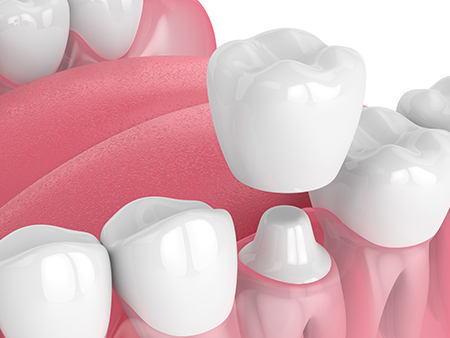
Not all ceramic crowns are the same—different materials offer varying combinations of strength, translucency, and ease of customization. The right choice depends on whether the restoration will be in a visible front tooth, subjected to heavy bite forces in the back, or required to match an adjacent tooth with particular color or translucency.
Lithium disilicate, leucite-reinforced ceramics, and zirconia are among the most commonly used materials today. Each has distinct strengths: some prioritize esthetics for front teeth, while others emphasize toughness for molars. Your dentist will recommend the best option after evaluating the tooth’s location, the bite, and your cosmetic expectations.
Material selection also considers how the crown will be fabricated—whether it will be milled from a single block (monolithic) or layered for additional esthetic detail. The goal is always to create a restoration that blends seamlessly with your smile while providing the support and durability needed for everyday function.
Lithium disilicate porcelain — prized for its balance of translucency and in‑mouth strength
Leucite-reinforced pressable ceramics — often used when fine color matching is critical
Monolithic solid zirconia — exceptionally durable and suitable for high-stress posterior teeth
High-translucency zirconia — combines improved esthetics with the toughness of zirconia systems

The crown process begins with a thorough exam, digital imaging, and sometimes intraoral scanning to capture precise tooth geometry. Preparation involves removing compromised tooth structure in a way that preserves healthy tissue and creates a stable foundation for the crown.
Many practices use CAD/CAM milling or partner with skilled dental labs to produce crowns with accurate fit and lifelike anatomy. When digital impressions are used, the crown design is often completed more quickly and with improved precision compared with traditional methods.
On the appointment to place the crown, your dentist will evaluate fit, color, and bite before permanently cementing the restoration. For same-day crown workflows, the entire procedure can sometimes be completed in one visit; otherwise, a custom-milled crown will be bonded when it meets both functional and cosmetic expectations.
Ceramic crowns are designed to last many years when cared for properly. Routine home care—brushing twice daily, flossing, and avoiding habits that place excessive force on the crown—helps prevent complications. Regular dental check-ups allow your clinician to monitor the crown, the supporting tooth, and the surrounding gum tissue.
Minor issues such as a loose crown or wear on adjacent teeth can be managed effectively when identified early. If a crown chips or the underlying tooth develops problems, prompt professional attention typically preserves the long-term success of the restoration.
Our team focuses on personalized treatment planning and uses contemporary materials and techniques to achieve predictable, natural-looking results. We work with patients to match expectations, choose the most appropriate ceramic system, and plan a restoration that meets both functional demands and esthetic goals.
In summary, ceramic crowns offer a compelling combination of cosmetic refinement and clinical reliability for restoring damaged or weakened teeth. If you would like to learn more about whether an all-ceramic crown is the best solution for your smile, please contact us for additional information.

While a dental filling is designed to replace a portion of a decayed or damaged tooth, a dental crown offers full coverage to restore the tooth’s entire outer surface. A well-fitting dental crown not only protects and strengthens the underlying tooth structure, but it also restores the tooth’s appearance and function.
The procedure for getting an all-ceramic crown is much like the procedure for getting any other type of crown. In all cases, the tooth needs to be prepared, an impression taken, and a permanent crown cemented into place. A single all-ceramic crown can typically be fabricated over the course of two visits. However, with CAD/CAM technology, a same-day crown can be fabricated from start to finish in a single visit. With the first approach, a temporary crown is typically worn until the second visit, when the permanent restoration is placed. As with every treatment plan, our office will explain your best options in care.
As the name implies, a temporary crown is only worn for a short time until the permanent crown is placed. A temporary crown is typically fabricated from durable tooth-colored dental acrylics. While designed to protect the underlying tooth between appointments, and until your new permanent crown gets placed, a temporary crown is also fabricated to look like a natural tooth and maintain the look of your smile.
While you should feel better having an attractive and functional tooth to restore your smile, your tooth may feel a little sensitive following treatment. This initial sensitivity will subside. We take great care to make sure your new restoration looks great, fits well, and your bite is perfect. However, we’re always happy to make any minor adjustments to ensure your comfort.
With some exceptions, teeth with root canal procedures are typically restored and protected from further damage with a full-coverage crown. Based on what’s best for your smile, our office will recommend the most appropriate restoration to maintain the health and longevity of your tooth following a root canal procedure.
A dental crown is a long-term restoration that, if properly cared for, can serve you well for many years to come. Once your new crown is placed, it requires the same brushing, flossing, and periodic checkups as your natural teeth. Avoid biting your fingernails and chewing on hard or sticky objects such as ice, pencils, or taffy, which can damage or loosen your crown. Remember, clenching and grinding your teeth puts excessive pressure on both natural teeth and dental restorations. Unless treated, this habit can compromise the longevity and integrity of your dental work, including crowns.
Although your new all-ceramic crown restores the tooth's strength, form, and function, you can still develop dental disease in the absence of proper care. To prevent gum disease and tooth decay, it’s essential to brush and floss as instructed and see our office for routine checkups, cleanings, and care.
How long a dental crown lasts depends on various factors, including your level of oral care, diet, and oral habits. While the standard answer is that dental crowns can last anywhere from 5 to 15 years, existing literature confirms that most dental crowns remain in place at 15 to 20 years.
At the office of Paulussen Dental, we strive to provide the highest quality of care to address all your dental needs. Once we’ve had the opportunity to examine your smile, we can give you a clear picture of any dental issues that are present, along with a quote for how much treatment will be. The cost of dental crowns can vary a little, depending on the type of crown and its location. Our goals are to provide the highest quality of care and help patients begin treatment without additional financial stress or delay. We’re always happy to answer all your questions on dental insurance coverage, available financing, and payment plans.
Coverage for all-ceramic crowns depends on your dental insurance plan. Today, many dental plans provide some level of coverage for all-ceramic crowns. At the office of Paulussen Dental, we work with patients to optimize their dental benefits and get the care they need to maintain healthy and beautiful smiles!
Ceramic crowns are full-coverage restorations made from tooth-colored ceramic materials that replace damaged or weakened tooth structure. Unlike traditional crowns that use a metal substructure with a porcelain veneer, all-ceramic crowns are metal-free and mimic the light transmission of natural enamel. This metal-free construction eliminates visible dark margins at the gumline and improves esthetic blending with adjacent teeth.
Modern ceramics come in a range of formulations that balance translucency and strength, allowing for lifelike appearance without sacrificing durability. Advances in material science mean many ceramic systems can withstand normal chewing forces in both front and back teeth. Because they are fabricated to match natural anatomy, ceramic crowns often provide superior cosmetic results compared with older metal-based options.
A ceramic crown is recommended when a tooth has lost too much structure for a filling to reliably restore function or when long-term protection is needed after root canal therapy, fracture, or extensive decay. Crowns are also used to restore implant abutments and to support traditional bridgework, where a durable, contoured surface is required. The choice to place a crown is based on the tooth's structural needs, bite relationship, and cosmetic goals rather than just immediate repair.
During evaluation, the dentist will consider how much healthy tooth remains, the location in the mouth, and whether adjacent teeth need matching for esthetic harmony. In some cases a less invasive onlay or inlay may suffice, while in others a full-coverage crown is the most predictable long-term solution. Careful planning helps ensure the restoration protects function while meeting a patient's appearance expectations.
Material selection depends on the location of the tooth, the amount of bite force it will encounter, and the desired level of esthetics. Lithium disilicate and leucite-reinforced ceramics offer excellent translucency and are often preferred for front teeth, while monolithic zirconia and high-translucency zirconia provide the strength needed for posterior restorations. Each material presents a distinct balance of fracture resistance, polishability, and color-matching potential.
Clinicians also consider whether the crown will be milled as a single block or layered for additional detail, since layered restorations can enhance lifelike shading but may require laboratory expertise. The dentist will evaluate the bite, opposing dentition, and any parafunctional habits to recommend the most appropriate ceramic system. Selecting the right material helps deliver a restoration that performs well under function and blends seamlessly with the smile.
The process begins with a thorough exam, digital imaging, and often an intraoral scan to capture the tooth's precise geometry and surrounding tissues. Tooth preparation is performed to remove compromised structure while preserving as much healthy tissue as possible and creating a stable foundation for the crown. Digital or traditional impressions are taken, after which the restoration is designed and fabricated using CAD/CAM milling or by a dental laboratory.
At the placement appointment the dentist will check fit, contacts, shade, and occlusion before permanently cementing the crown. For restorations fabricated in a dental lab, a provisional crown may be used while the final piece is completed. Meticulous adjustments at seating help ensure comfort, proper bite function, and a natural appearance that meets the patient's expectations.
Yes, many dental offices offer single-visit ceramic crowns using chairside CAD/CAM systems that scan, design, and mill a restoration during the same appointment. This workflow is efficient for straightforward cases and reduces the need for provisional crowns, but it may not be suitable for every situation. Complex esthetic cases, multi-unit restorations, or crowns requiring specialized layering often benefit from laboratory fabrication.
The dentist will determine whether a same-day crown is appropriate based on the tooth position, required material, and esthetic goals. Even with same-day workflows, careful finishing and occlusal adjustment remain essential to achieve a precise fit and comfortable bite. Patients should discuss expectations and timing options with their clinician during the consultation.
Caring for ceramic crowns begins with routine oral hygiene: brushing twice daily with a fluoride toothpaste and flossing once a day to keep the margins and surrounding gum tissue healthy. Avoiding habits that place excessive force on the restoration—such as chewing ice, opening packages with teeth, or persistent nail biting—reduces the risk of chipping or fracture. Regular dental checkups and professional cleanings allow clinicians to monitor the crown, the supporting tooth, and the gum tissue for early signs of wear or problems.
If a crown becomes loose, chipped, or sensitive, patients should contact the office promptly for evaluation to prevent further damage. Minor cosmetic or functional issues can often be managed conservatively when identified early, and repairs or replacement can be planned as needed. Our team provides guidance on oral care practices and preventive measures to help crowns perform well for many years.
Ceramic crowns are an excellent option for patients with metal sensitivities because they are metal-free and biocompatible, reducing the risk of allergic reactions and minimizing tissue irritation. The inert nature of modern dental ceramics generally makes them well tolerated by soft tissues, and many patients appreciate the absence of metal in the oral environment. Ceramic materials also tend to be gentle on opposing teeth when properly polished and adjusted.
That said, no restoration is completely immune to mechanical failure; ceramics can chip or fracture under excessive force, especially in uncontrolled bruxism. For patients who clench or grind, the dentist may recommend protective measures such as a nightguard to safeguard the crown and surrounding dentition. A thorough assessment helps the clinician advise the safest and most durable solution for each patient's needs.
Ceramic crowns are designed to closely match the color, translucency, and luster of natural teeth, and shade matching begins with a careful evaluation of surrounding dentition under appropriate lighting. Digital shade-taking and communication with the dental laboratory help reproduce subtle variations in hue and translucency, while layering techniques can enhance depth and lifelike character. For single-tooth restorations, the goal is seamless integration so the crown is indistinguishable from adjacent teeth.
Because ceramics resist typical staining agents better than natural enamel, crowns tend to maintain their appearance over time with proper care. Minor adjustments such as polishing or glazing can refine surface texture and shine after placement. If major color discrepancies exist, the dentist will discuss options to harmonize the restoration with the smile, including replacement if clinically appropriate.
The lifespan of a ceramic crown varies depending on material choice, oral hygiene, bite forces, and the amount of remaining tooth structure, but many ceramic restorations function well for a decade or longer with proper care. Consistent home care, avoidance of damaging habits, and routine dental visits contribute significantly to durability. The quality of the fit and occlusal adjustments performed at placement also play a major role in long-term success.
Factors that can shorten a crown's lifespan include untreated bruxism, recurrent decay at the margin, trauma, or poor bite alignment. Regular monitoring allows the dentist to detect early signs of wear, leakage, or marginal breakdown so that timely maintenance or replacement can be planned. Open communication with the dental team about any changes in comfort or function helps preserve the restoration and underlying tooth.
Paulussen Dental combines contemporary digital imaging, intraoral scanning, and CAD/CAM workflows with experienced clinical protocols to achieve predictable, well-fitting ceramic restorations. Careful preparation, accurate impression capture, and close collaboration with skilled technicians or in-house milling systems help produce crowns that match anatomy and occlusion accurately. Throughout the process the team prioritizes patient comfort, precise bite adjustment, and esthetic harmony.
Follow-up care and verification appointments are part of the practice's approach to ensure each restoration performs as intended and to address any minor refinements promptly. The clinicians at Paulussen Dental review material options and restorative design with patients so treatment reflects both functional needs and cosmetic expectations. This comprehensive, patient-centered workflow supports long-term success and a natural-looking result.