Existing Patients
(908) 850-4200
New Patients
(908) 275-5307


Missing teeth change more than the way a smile looks — they affect chewing, speech, and long-term oral health. Many adults face tooth loss from decay, gum disease, or injury, and modern implant dentistry offers a reliable way to restore both function and appearance. At Paulussen Dental in Hackettstown, NJ, we focus on customized implant care that helps patients regain confidence while protecting the structures that support a healthy mouth.
Implant treatment centers on replacing the tooth root with a biocompatible post that serves as the foundation for a crown, bridge, or denture. This root-level approach preserves jawbone density and supports natural facial contours in a way that removable options cannot. For patients who want stability, predictable results, and a solution that feels like real teeth, implants are often the most appropriate option.
Every implant plan begins with an assessment of your general health, oral condition, and personal goals. Our team explains options clearly and tailors the process to the needs of each patient, balancing practical concerns such as healing time and day-to-day comfort with the cosmetic outcomes that matter most to individuals.
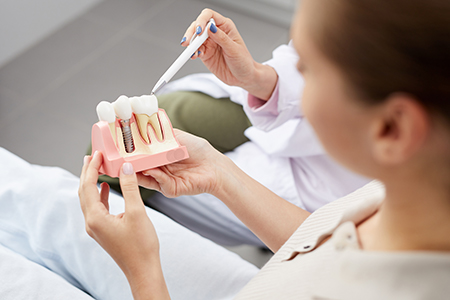
Unlike appliances that simply rest on the gums, dental implants integrate with the jawbone to provide a stable root substitute. Once healed, they support restorations that look, feel, and function like natural teeth, allowing patients to eat comfortably and speak clearly. This integration also helps preserve bone over time, which supports facial structure and reduces the gradual changes that accompany missing teeth.
Because implants work at the root level, they avoid common trade-offs associated with traditional restorations. Adjacent teeth do not need to be altered to support an implant crown, and implant-supported restorations eliminate many of the stability concerns that come with removable dentures. The result is a restoration strategy that focuses on long-term oral health and ease of maintenance.
Patients who choose implant care often appreciate the freedom to enjoy a varied diet and an active lifestyle without worrying about shifting prostheses. With routine maintenance and proper oral hygiene, implants can become a lasting part of a healthy smile.
At its core, an implant is a small, medical-grade post placed in the jaw to replace a missing tooth root. Implants are made from materials that encourage bone growth around the post, forming a stable union known as osseointegration. Once that bond is secure, the implant supports a custom-made prosthesis designed to match the shape, color, and bite of the patient’s natural dentition.
Treatment planning uses modern imaging and digital tools to evaluate bone quality, nerve positions, and sinus anatomy. These diagnostic steps allow our team to place implants precisely and minimize surprises during surgery. The overall approach emphasizes predictability, safety, and the best possible aesthetic outcome for each patient.
Dental implants offer benefits that extend beyond cosmetics. Because they replace the tooth root, implants support the jawbone and help prevent the bone loss that occurs after extraction. Maintaining bone volume protects facial proportions and can reduce the need for more extensive restorative work later on.
Functional improvements are also significant: implants restore reliable chewing capacity and eliminate the worry of slippage or discomfort associated with removable dentures. This stability makes it easier to maintain a balanced diet and enjoy social situations without anxiety about dental appliances.
From a maintenance standpoint, implant-supported teeth are cared for much like natural teeth. Regular brushing, flossing, and professional checkups help preserve both the restoration and the surrounding tissues, contributing to predictable long-term results.
When one tooth is missing, a single implant capped with a custom crown is often the preferred solution. This approach replaces the lost root and crown without altering neighboring teeth, preserving more of the patient’s natural dental structure. The result is a restoration that blends with the adjacent dentition in size, shape, and color.
For gaps of several teeth, implant-supported bridges provide a fixed, durable option that eliminates the need to prepare adjacent teeth for crowns. Strategic placement of implants supports multiple replacement teeth and distributes biting forces evenly, which benefits both function and long-term stability.
When an entire arch needs replacement, implant-retained full-arch restorations can recreate a natural-feeling set of teeth that remain fixed in the mouth. These solutions can be designed to allow immediate temporary teeth for quicker restoration of function, with a permanent prosthesis placed after the implants integrate with the bone.
Some patients prefer a removable prosthesis that snaps onto implants for added stability. Implant-retained dentures combine the security of implant anchors with the familiarity of a removable restoration, offering improved retention and comfort over traditional dentures while still allowing for straightforward daily cleaning.
Successful implant treatment starts with a careful assessment of overall health, oral hygiene, and bone condition. Digital imaging helps our team map out implant positions and choose the right type of restoration for each patient. Planning also includes discussion of anesthesia and sedation options to ensure a comfortable experience.
Placing an implant is typically performed as an outpatient procedure and is often described as routine in modern dental practice. After placement, a healing period allows the implant to integrate with the bone. During this time, many patients wear a protective temporary restoration while the foundation matures.
Once healing is complete, the final crown, bridge, or denture is attached to the implant(s). These restorations are crafted to match the bite and appearance of the surrounding teeth. Long-term success depends on regular dental visits and consistent at-home care to preserve both the prosthesis and the health of the gums and bone around it.
Sufficient bone volume is essential to support an implant. In cases where bone has diminished, grafting procedures can rebuild the support needed for a stable implant foundation. Bone grafts use safe, well-established materials and techniques to restore lost volume and create conditions for successful implant placement.
While implant restorations resist decay, they still rely on healthy gums and bone. Routine cleanings, periodontal health monitoring, and excellent daily hygiene are critical. Regular follow-up appointments allow the dental team to catch early signs of complications and intervene when necessary to maintain long-term success.
Choosing implant care is a collaborative process. Patients who understand the steps involved and who commit to recommended maintenance plans are more likely to enjoy durable, predictable results. Clear communication and thoughtful planning help ensure that each implant restoration supports the patient’s goals for function, comfort, and appearance.
Paulussen Dental takes a patient-first approach to implant care, combining modern diagnostics with individualized treatment plans. If you’re considering implants and want to understand how they might fit your needs, please contact us to discuss your options and schedule an evaluation. We’re here to answer questions and help you take the next step toward a stable, natural-looking smile.

If you've lost a tooth due to injury, decay, gum disease, or any other reason, we recommend dental implants to replace missing teeth. Dental implants come the closest to replicating the look, feel, and function of your natural teeth.
Dental implants are placed into the jawbone and mirror the same function as the root of a tooth. The procedure for dental implants is usually performed while a patient is sedated. Patients who undergo IV sedation must have an empty stomach and transportation home following the procedure. Most sedation patients will have little to no memory of the procedure occurring.
Generally, dental implants are made out of a biocompatible metal such as titanium. Biocompatible metals are also used for other common bone implants (such as shoulder, hip, and knee replacements). The visible portion of the implant is usually made out of porcelain and is custom-made to match your existing teeth.
Dental implants are designed to fuse to the bone, which makes them become permanent fixtures. Typically speaking, the success rate is nearly 100%. There are few cases in which the implant will not fuse as intended and must be removed. If this happens to occur, the procedure can be attempted again a few months later.
Dental implants are not usually covered by dental insurance, but may be covered under a patient's medical insurance. Our office and your insurance company can discuss coverage options with you based on your individual case and treatment plan.
It's easy... just take care of an implant as if it's a natural tooth! This involves regular brushing, flossing, and dental checkups. If you have any concerns about your implant, contact us immediately.
Dental implants are medical-grade posts that replace missing tooth roots and provide a stable foundation for crowns, bridges, or dentures. After placement, the implant integrates with the jawbone through a process called osseointegration, creating a durable union that mimics the support of a natural root. The final restoration is attached to the implant and is designed to match the shape and function of the surrounding teeth.
Because implants engage the underlying bone, they help preserve jaw volume and support facial contours in ways that removable appliances cannot. Implants restore chewing efficiency and speech more predictably than many traditional options, allowing patients to eat and speak with greater confidence. Long-term success depends on careful planning, precise placement, and consistent oral hygiene.
Good candidates for dental implants generally have adequate bone volume, healthy gums, and an overall commitment to oral hygiene and routine dental care. Medical conditions and certain medications can affect healing, so a thorough medical and dental history is important to determine suitability. Age is less of a factor than bone quality and oral health; many adults of varying ages can be successful implant patients with appropriate evaluation.
Patients who smoke or have uncontrolled periodontal disease will be counseled about treatment or behavior changes that improve outcomes, since these factors can increase the risk of complications. A personalized assessment identifies modifiable risks and potential preparatory procedures, such as bone grafting, to create a reliable foundation. The goal is to tailor care so each patient moves forward with predictable expectations and a clear plan.
Comprehensive planning uses clinical exams and modern imaging to evaluate bone quantity, nerve locations, and sinus anatomy to ensure safe, accurate implant placement. Cone beam computed tomography (CBCT) or other 3D imaging allows the team to visualize anatomy in three dimensions and plan the optimal implant position and angulation. Digital impressions and bite analysis may also be used to design restorations that integrate well with the patient’s existing teeth and bite.
During the planning phase, clinicians discuss anesthesia and sedation options, healing timelines, and the expected sequence of appointments so patients know what to expect. The team will explain restorative choices—single crowns, bridges, fixed full-arch restorations, or implant-retained overdentures—and recommend the best option based on function and esthetics. Clear communication at this stage reduces surprises and supports predictable clinical outcomes.
Implant placement is typically performed as an outpatient procedure using local anesthesia and, when appropriate, sedation to ensure patient comfort. The clinician places the implant into the prepared site in the jaw, and a protective cover or temporary restoration may be provided while osseointegration occurs. Many patients report manageable post-operative discomfort that is controlled with standard pain management and brief recovery instructions.
The healing period usually spans several weeks to a few months, depending on bone quality and whether grafting was required, as the implant bonds with the surrounding bone. Regular follow-up visits monitor healing and address any concerns, and temporary prostheses can maintain function and esthetics during this time. Once integration is confirmed, the final restoration is attached and adjusted for optimal fit, bite, and appearance.
Implant restorations range from single crowns that replace one missing tooth to multi-unit bridges and fixed full-arch prostheses that restore several or all teeth. Implant-supported bridges allow multiple missing teeth to be replaced without altering adjacent healthy teeth, while fixed full-arch options recreate an entire dental arch with a stable, nonremovable restoration. For patients who prefer a removable solution, implant-retained overdentures snap onto implants to provide improved retention and comfort compared with traditional dentures.
Advanced protocols such as All-on-4® or All-on-6® use strategically placed implants to support a full-arch prosthesis with fewer implants and may allow for immediate temporary teeth in selected cases. The choice of restoration depends on bone availability, the number and position of implants, and the patient’s functional and esthetic goals. Careful prosthetic design ensures that the final result is balanced for chewing function and long-term health of the supporting tissues.
Bone grafting is a procedure used to rebuild or augment jawbone when there is insufficient volume to support an implant reliably. Grafting materials and techniques vary, from minor ridge augmentations to larger grafts and sinus lifts, and are selected based on the specific anatomy and clinical goals. Successful grafting creates a stable, healthy foundation that allows implants to achieve secure osseointegration and long-term function.
Not every patient requires grafting; the need is determined during the diagnostic imaging and planning phase. When grafting is recommended, the clinician will explain the type of graft, the anticipated healing timeline, and how the graft integrates with the natural bone. Careful management and follow-up help ensure the graft matures appropriately before implant placement, improving predictability.
Implants require the same attentive daily care as natural teeth, including brushing, flossing, and cleaning around the implant-restoration interface to remove plaque and prevent inflammation. Professional maintenance visits are essential to monitor gum and bone health, check the integrity of the restoration, and perform deep cleaning where necessary. Good oral hygiene and regular checkups significantly reduce the risk of peri-implant disease and help preserve implant function.
Patients with implant-supported prostheses may be given specific cleaning tools such as interdental brushes or floss designed for implants and fixed bridges. The dental team will provide individualized instructions and a maintenance schedule tailored to the type of restoration and the patient’s oral condition. Adhering to those recommendations supports reliable, long-term results and helps detect issues early.
As with any surgical procedure, implant treatment carries risks such as infection, bleeding, and delayed healing, as well as implant-specific concerns like failure to integrate or peri-implant inflammation. Thorough preoperative evaluation, sterile surgical technique, and appropriate antibiotic or antiseptic measures when indicated help reduce these risks. If complications arise, prompt evaluation and targeted treatment—ranging from non-surgical therapy to surgical revision—can often resolve the issue and protect surrounding tissues.
Long-term complications are frequently related to poor oral hygiene or unchecked periodontal disease, so preventive care is the best defense. The dental team monitors implants at routine visits and can intervene early with professional cleaning, hygiene reinforcement, or localized therapy if signs of inflammation appear. Open communication between patient and clinician is important for addressing concerns quickly and preserving the investment in oral health.
Implants differ from traditional dentures and tooth-supported bridges by replacing the tooth root as well as the visible crown, which preserves bone and provides more secure function. Bridges often require reshaping adjacent healthy teeth to support the restoration, while single-tooth implants typically leave neighboring teeth intact. Removable dentures can restore appearance and some function but may lack the stability and bone-preserving benefits that implants offer.
The choice between implants and other options depends on the patient’s oral health, bone condition, and restorative goals; implants generally provide a more permanent, low-maintenance solution when conditions are favorable. For some patients, a combination approach—such as implant-retained overdentures—can balance stability with ease of cleaning. A personalized consultation identifies the option that best aligns with long-term oral health and lifestyle priorities.
The overall timeline for implant treatment varies by case complexity and whether preparatory procedures like bone grafting are needed, but many straightforward cases progress from evaluation to final restoration over several months. After diagnostic planning, implant placement is followed by a healing period to allow osseointegration, which commonly ranges from a few weeks to several months depending on bone quality and clinical protocol. Temporary restorations can often maintain aesthetics and function during this phase.
Once the implant has integrated, the final prosthesis is fabricated and attached, and the patient begins routine maintenance visits to monitor the restoration and surrounding tissues. Complex reconstructions or full-arch solutions may require additional appointments for adjustments and laboratory work, which extend the timeframe accordingly. The treatment schedule is individualized and discussed in detail during the planning visit so patients know what to expect at each stage.
To learn whether dental implants are a suitable option, schedule a comprehensive evaluation with a dental team experienced in implant planning and restoration in Hackettstown, NJ. During that appointment you will receive a clinical exam, necessary imaging, and a clear explanation of recommended steps tailored to your oral health and goals. The team will answer questions about anesthesia, timelines, and the restorative options that best match your needs.
Paulussen Dental takes a patient-centered approach to implant care and coordinates diagnostics and restorative planning to help patients make informed decisions. If you are considering implants, request an evaluation to discuss your case and receive a personalized plan for predictable, long-term results.